
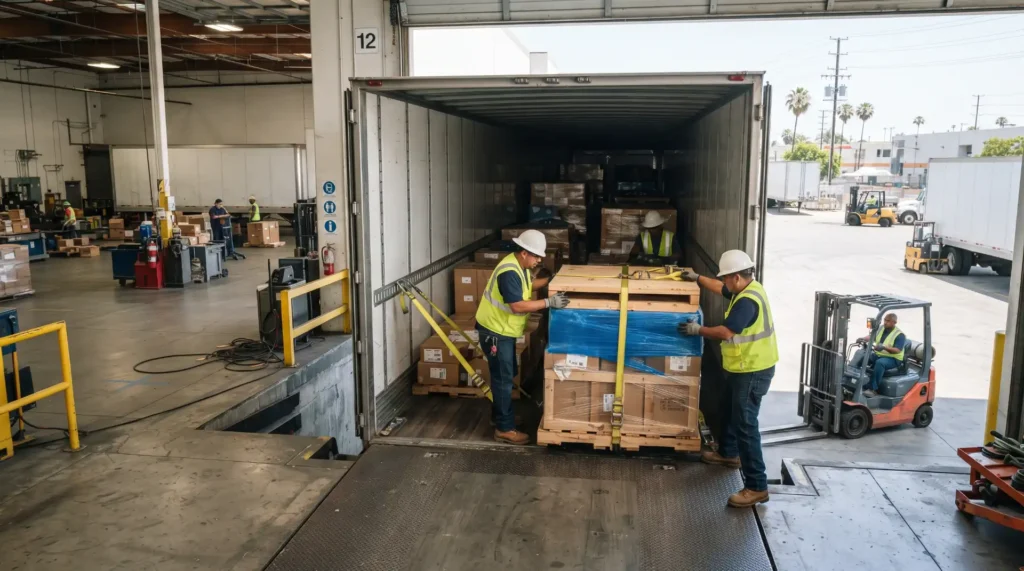
Commercial trucks move an enormous amount of freight throughout the United States every day. In Southern California, that activity is particularly important because the region connects major ports, distribution centers, warehouses, manufacturers, retailers, and transportation corridors. Trucks travel between facilities throughout Orange County and surrounding areas, carrying everything from consumer products and construction materials to industrial equipment and food.
When a truck accident occurs, attention often turns immediately to the driver and trucking company. Investigators may examine whether the driver was speeding, distracted, fatigued, impaired, or otherwise operating the vehicle unsafely. The trucking company may also be investigated for maintenance, training, scheduling, hiring, and regulatory compliance.
However, not every truck accident begins with something the driver did behind the wheel.
The cargo inside the trailer can also affect how a commercial vehicle handles. Freight that is improperly distributed, inadequately secured, too heavy, damaged, unstable, or loaded in a way that creates an unsafe center of gravity can contribute to a collision. In some circumstances, questions may arise about the shipper, warehouse, cargo-loading company, contractor, or another party that participated in preparing the freight for transportation.
That does not mean a shipper automatically becomes legally responsible whenever improperly loaded cargo contributes to a crash. Federal regulations generally place important cargo-inspection and securement responsibilities on the motor carrier and driver. FMCSA guidance specifically states that, in the ordinary situation involving a non-hazardous shipment, the motor carrier and driver are responsible for ensuring cargo aboard the vehicle is properly loaded and secured.
At the same time, a civil injury claim can involve broader questions about who actually performed the loading, who controlled the loading process, what instructions were provided, whether a company created an unsafe condition, and whether that conduct contributed to the collision.
Understanding that distinction is important when investigating a truck accident in Orange County.
Why Cargo Loading Matters in a Commercial Truck Accident
Cargo does more than occupy space inside a trailer. The weight and location of freight can influence a truck’s stability, braking, acceleration, steering, and response to sudden changes in traffic.
A properly loaded trailer should distribute weight appropriately and use suitable securement methods for the particular cargo. When freight is not adequately restrained, it can shift as the truck accelerates, brakes, turns, or travels over uneven pavement.
A sudden cargo shift can change the truck’s balance while it is moving. In serious situations, the vehicle may become difficult to control, particularly during an emergency maneuver.
Improper loading can also contribute to other problems. Cargo that moves toward the rear or side of a trailer may affect weight distribution. Heavy objects placed in inappropriate locations can alter the vehicle’s center of gravity. Freight that is not properly restrained can strike other cargo, damage the trailer, or potentially fall from the vehicle.
The danger becomes more significant when a truck is traveling at freeway speeds. A passenger vehicle driver nearby may have little time to respond if cargo falls from a truck or the truck suddenly changes direction.
For this reason, a truck accident investigation may need to examine not only what happened on the road but also what happened before the truck left the loading facility.
What Is a Shipper in the Trucking Industry?
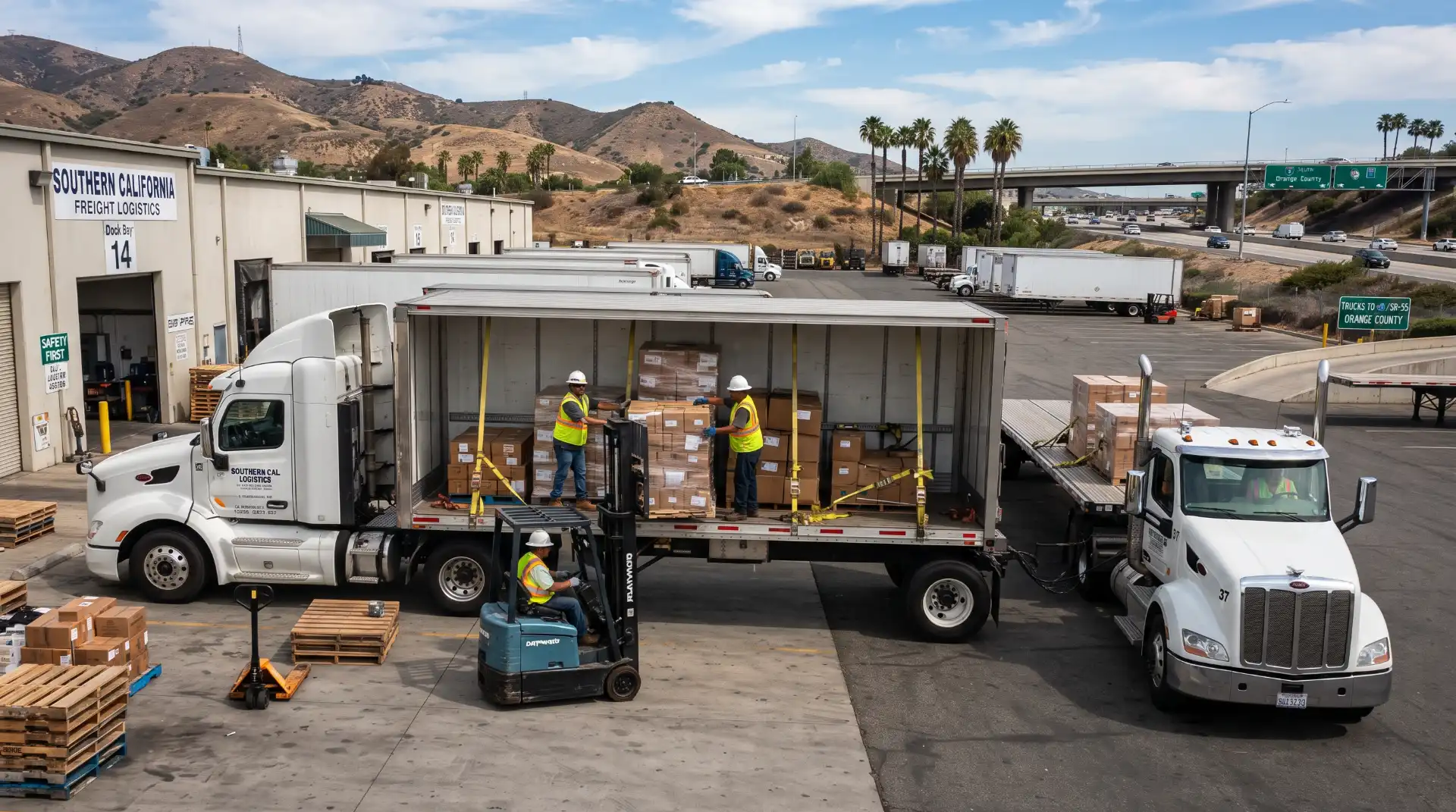
The term “shipper” generally refers to the party that tenders goods for transportation. Depending on the shipment, the shipper may be a manufacturer, distributor, retailer, warehouse operator, supplier, or another business sending freight to a destination.
A shipper is not necessarily the same entity as the trucking company.
For example, a manufacturing company may produce equipment and hire a motor carrier to transport that equipment. A warehouse may prepare pallets for pickup while an independent trucking company provides the tractor and driver. A logistics company may coordinate transportation while another company physically loads the trailer.
These distinctions matter because responsibility can depend on what each organization actually did.
A business that merely owns the cargo may have a different role from a company whose employees physically loaded the trailer. A warehouse that controlled the loading process may have different responsibilities from a broker that arranged transportation but never handled the freight.
Consequently, identifying every participant in the shipment can be an important part of a truck accident investigation.
When Can a Cargo Loading Company Become Relevant?
A cargo-loading company may become relevant when evidence suggests that its conduct contributed to the unsafe condition that caused the crash.
One example could involve a loading company that placed heavy cargo in an unsafe configuration and failed to follow applicable loading procedures. Another situation could involve freight that was not properly restrained before the truck departed.
The specific facts matter.
A loading company does not become automatically liable merely because its employees loaded the trailer. The investigation generally needs to determine whether the company owed a duty of care, whether it failed to use reasonable care, whether that failure contributed to the collision, and whether the injured person suffered legally recognized damages.
The relationship between federal trucking rules and state negligence law can also be important. Federal regulations establish safety requirements for commercial transportation, but a personal injury lawsuit may involve additional state-law questions concerning negligence and causation.
This is one reason truck accident cases can become more complicated when cargo problems are involved.
Improper Cargo Distribution Can Affect Truck Stability
One of the most important questions after a cargo-related truck accident is how the freight was distributed inside the vehicle.
A trailer can carry thousands of pounds of cargo, and the location of that weight matters. If heavy freight is concentrated in an inappropriate area, the truck’s handling characteristics can change.
Improper weight distribution may become particularly significant during turns, emergency braking, evasive maneuvers, or sudden lane changes.
Consider a truck traveling on an Orange County freeway when traffic suddenly slows. The driver brakes heavily to avoid a collision. If cargo shifts because it was improperly positioned or restrained, the movement of that cargo may change the truck’s balance at precisely the moment the driver needs maximum control.
The accident investigation would need to determine what actually caused the loss of control. A cargo problem might be one contributing factor, while speed, road conditions, following distance, vehicle condition, or another driver’s actions could also play a role.
This is why investigators should avoid assuming that a damaged or shifted load automatically establishes liability.
Cargo Securement Is Different From Cargo Ownership
Owning the cargo and securing the cargo are not necessarily the same responsibility.
A company may own a shipment without physically loading it. Another business may operate the warehouse where the freight is prepared. A trucking company may provide the trailer and driver. A third-party contractor may use equipment to place the cargo inside the trailer.
These different roles can make the investigation more complicated.
Federal regulations include detailed requirements concerning cargo securement for commercial motor vehicles. The rules address issues such as securement devices, working load limits, blocking, bracing, tiedowns, and different types of cargo. The federal regulations are contained in Title 49 of the Code of Federal Regulations, including the commercial motor vehicle cargo-securement requirements in Part 393.
However, federal compliance does not eliminate the need to investigate the actual circumstances of a collision.
A truck may have departed a loading facility with cargo that appeared secure but later developed a problem. Alternatively, the cargo may have been inadequately restrained from the beginning.
Determining which scenario occurred requires evidence.
Why the Driver May Still Have Responsibilities
When a truck accident involves cargo, it can be tempting to assume that the company that loaded the trailer is automatically responsible. That assumption can be incorrect.
FMCSA guidance explains that the motor carrier and driver generally have responsibility for ensuring cargo is properly loaded and secured, subject to the applicable regulatory framework.
The driver may inspect the load before operating the vehicle and may have an obligation to recognize an obviously unsafe condition.
A driver who notices loose cargo, an improperly positioned load, damaged securement equipment, or another obvious safety problem may have reason to stop and address the issue before continuing.
This means a cargo-related crash can involve more than one potential contributing factor.
For example, a shipper might improperly arrange cargo, while a driver might fail to identify an obvious problem before leaving the facility. Alternatively, the cargo might have been properly loaded initially but become loose because of a defective securement device or another mechanical issue.
The evidence must establish what happened and who had the ability and responsibility to address the problem.
Evidence That Can Help Establish How Cargo Was Loaded
Evidence can be particularly important because the physical condition of cargo may change after a crash.
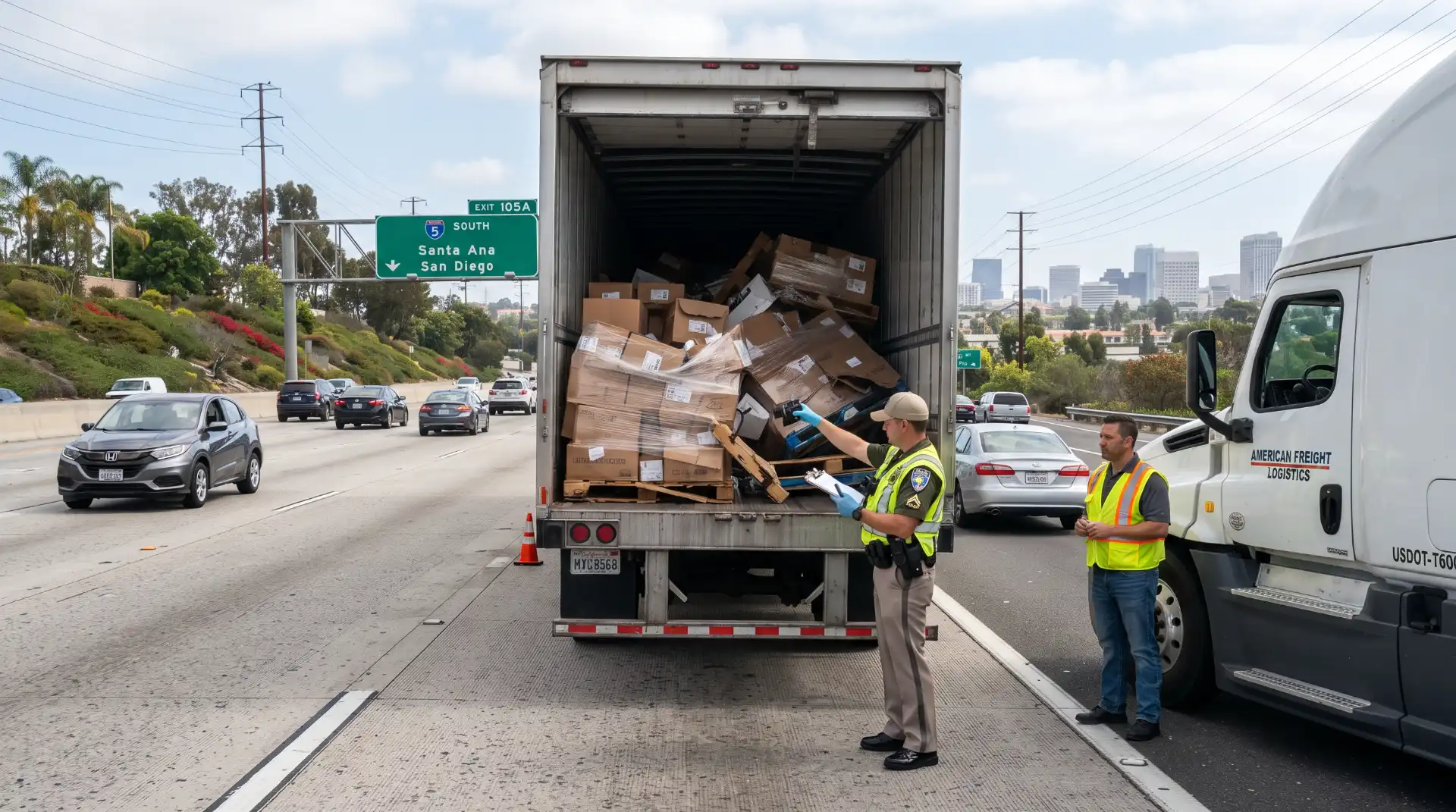
Once a trailer is opened, freight may be moved. Damaged items may be removed. Securement equipment may be replaced. The truck may be repaired or released. These changes can make it harder to reconstruct the original condition of the load.
Important evidence may include photographs taken at the accident scene, photographs of the cargo after the collision, loading diagrams, bills of lading, shipping documents, weight records, inspection reports, warehouse records, employee statements, delivery records, and photographs or video from the loading facility.
Security-camera footage can be especially useful when available. A warehouse camera may show how pallets were positioned, whether workers used straps or other securement equipment, and how the trailer looked when it left the facility.
Electronic records can also provide useful context.
A truck’s electronic data may help investigators establish speed, braking, vehicle movements, and timing. GPS information may establish when the vehicle left the facility and where it traveled before the crash.
When these records are compared with physical evidence, investigators may develop a clearer understanding of the sequence of events.
Readers can also review [How to Prove Fault in an Orange County Truck Accident Case]How to Prove Fault in an Orange County Truck Accident Case for additional information about evidence commonly examined in commercial truck collision investigations.
Bills of Lading and Shipping Records Can Matter
A bill of lading can provide information about the shipment, including the parties involved, cargo descriptions, quantities, and transportation arrangements.
Although a bill of lading alone does not necessarily establish who is legally responsible for a crash, it can help investigators identify the businesses involved in the shipment.
Other shipping records may provide additional information about weight, destination, loading location, delivery instructions, and handling requirements.
For certain types of cargo, specialized loading instructions may be particularly important. Heavy machinery, steel products, construction materials, liquids, industrial equipment, and unusually shaped objects may require different handling and securement methods.
If a shipment required special precautions and evidence indicates that those precautions were ignored, the circumstances may become relevant to a negligence investigation.
The same principle applies when cargo has unusual physical characteristics. Freight that can roll, slide, tip, leak, or shift may require specific preparation before transportation.
The legal question is not simply whether the cargo moved. Investigators need to determine why it moved and whether a particular party’s conduct contributed to the unsafe condition.
What Happens When Cargo Falls From a Truck?
Falling cargo can create an especially dangerous situation for motorists.
A truck traveling at freeway speed may lose an object from the trailer, leaving drivers behind the truck with very little time to react. A motorist may swerve into another lane, collide with another vehicle, or strike the cargo directly.
In other situations, the truck may stop suddenly after discovering that cargo has moved or fallen.
These crashes can produce multiple collisions involving several vehicles.
Investigators may therefore need to determine the original event that triggered the chain reaction. If a large object fell from a truck because of an unsecured load, the condition of the cargo before the crash could become highly relevant.
However, liability may still depend on additional facts, including whether the truck driver had an opportunity to identify the problem, whether another vehicle contributed to the collision, and whether a third party created the unsafe condition.
Can a Shipper Be Responsible for Overloaded Cargo?
Weight is another issue that may arise in cargo-related truck accidents.
Commercial vehicles operate under weight restrictions and other requirements intended to protect road users and transportation infrastructure. An overloaded vehicle may have different braking and handling characteristics, and excessive weight can place additional stress on tires, brakes, suspension components, and other systems.
An investigation may examine weight tickets, scale records, shipping documents, axle weights, vehicle specifications, and cargo records.
If a shipper provided inaccurate weight information, deliberately exceeded an agreed or lawful load limit, or otherwise contributed to an unsafe loading condition, those facts could become relevant to a civil liability analysis.
At the same time, weight-related liability should not be assumed merely because a truck was involved in a serious crash.
The actual weight of the vehicle, the applicable limits, the road and vehicle configuration, the driver’s conduct, and the causal relationship between the load and the collision all matter.
What If the Cargo Was Loaded by a Warehouse?
Warehouses frequently serve as the point where freight moves between manufacturers, distributors, and transportation companies.
A warehouse may have its own employees, contractors, equipment operators, and loading procedures. In some arrangements, the warehouse may be responsible for preparing cargo before the carrier arrives.
If a warehouse employee improperly loads or secures cargo and that condition contributes to a later crash, the warehouse’s role may become part of the investigation.
The legal analysis can depend heavily on the contract between the parties and the actual work performed.
For example, one contract may require the shipper to prepare and secure the cargo, while another arrangement may assign loading responsibilities to the carrier.
The written agreement is therefore potentially important, but it is not necessarily the only evidence that matters. What the parties actually did can also be significant when reconstructing the shipment process.
Third-Party Contractors Can Complicate Truck Accident Claims
Modern freight transportation often involves multiple businesses.
A manufacturer may send products to a distribution center. A warehouse may use an outside company for loading. A motor carrier may transport the goods. A separate company may own or lease the trailer.
When a crash occurs, determining which organization performed which task can take substantial investigation.
This is particularly important when the company named on the truck is not the same company that prepared the cargo.
The injured person may not know which business loaded the trailer. The truck’s branding may identify the carrier but provide no information about the warehouse or loading contractor.
Records obtained during an investigation may reveal the identities of these businesses.
These records can include shipping documents, contracts, dispatch records, invoices, warehouse logs, employee records, loading checklists, and communications between the companies.
The goal is not to name as many defendants as possible. The goal is to identify the parties whose actions or omissions may have contributed to the accident.
How California Negligence Principles Can Apply
A cargo-loading claim in California may involve ordinary negligence principles in addition to trucking regulations.
In general terms, negligence involves a failure to use reasonable care under the circumstances that causes harm to another person. A claim may require proof concerning duty, breach, causation, and damages.
The presence of a federal trucking regulation can provide important context, but a regulation violation does not necessarily answer every question in a personal injury lawsuit.
The investigation still needs to connect the alleged unsafe loading practice to the collision and the resulting injuries.
California cases can also involve comparative responsibility. If evidence shows that more than one person or organization contributed to an accident, responsibility may be allocated among the parties according to the applicable legal rules.
That could mean a case involving improperly loaded cargo may require analysis of the shipper, loading company, motor carrier, driver, maintenance provider, another motorist, or other potentially relevant parties.
The exact legal consequences depend on the facts and applicable California law.
How Cargo Problems Can Affect Injury Claims
Truck crashes involving cargo can produce serious injuries because commercial vehicles are much larger and heavier than passenger cars.
A collision can cause traumatic brain injuries, spinal injuries, fractures, internal injuries, soft-tissue injuries, and other serious conditions.
In addition to the immediate medical treatment, an injured person may require rehabilitation, follow-up appointments, medication, physical therapy, surgery, or long-term care.
A complete injury claim may therefore involve more than the initial hospital bill.
Economic losses can include medical expenses, lost wages, reduced earning capacity, rehabilitation costs, and other objectively verifiable losses. Depending on the circumstances, non-economic damages may also be available for losses such as pain, suffering, emotional distress, and loss of enjoyment of life.
California law also contains rules concerning comparative fault and allocation of damages among defendants. The specific application depends on the facts and legal claims involved.
This is another reason why establishing the cause of the accident is important.
Why Preserving the Trailer and Cargo Can Be Important
The condition of the trailer and cargo immediately after a crash may provide evidence that cannot easily be recreated later.
If cargo shifted, investigators may want photographs showing where the freight ended up. If a strap broke, the physical condition of the strap may be relevant. If a pallet collapsed, the pallet and its packaging may provide information about how the cargo was arranged.
The trailer itself can also contain important evidence.
Damage to the trailer floor, walls, doors, anchor points, tie-down equipment, and other components may help accident investigators understand how the load moved.
For this reason, preservation of evidence can become an important part of a serious truck accident investigation.
A trucking company or cargo-loading business may have its own insurance representatives and investigators who begin examining the crash shortly after it occurs. An injured person may therefore benefit from obtaining legal advice promptly when a serious collision raises questions about cargo loading.
Internal Investigation and Company Records
Businesses involved in freight transportation often maintain records that are not available at the accident scene.
A cargo-loading company may have employee training records, loading checklists, safety policies, equipment inspection documents, warehouse surveillance footage, and internal communications.
A shipper may have shipping instructions, weight records, packaging information, and contracts with transportation providers.
A carrier may have driver records, electronic vehicle information, inspection documents, dispatch records, and maintenance files.
Together, these materials can help reconstruct the shipment from the moment the cargo was prepared until the moment the accident occurred.
The investigation may also reveal whether similar problems had been documented previously.
Prior complaints or repeated loading issues may be relevant depending on the facts and applicable evidentiary rules. However, the existence of an earlier problem does not automatically establish liability for a later accident.
Each piece of evidence needs to be evaluated in context.
How Federal Trucking Regulations Fit Into the Investigation
Federal motor carrier safety regulations establish many requirements affecting commercial vehicle operations.
Cargo securement is addressed through federal regulations governing commercial motor vehicles. These rules address the securement of cargo and the equipment and methods used to prevent cargo from shifting or falling.
The federal regulatory framework is extensive, and the requirements can differ depending on the type of cargo and vehicle involved. The current eCFR provides the applicable federal transportation regulations and is updated as federal rules change.
Your existing article, [What You Should Know About Trucking Regulations in Orange County]What You Should Know About Trucking Regulations in Orange County, provides a broader discussion of federal and California trucking requirements.
This new article focuses more narrowly on the relationship between cargo loading and potential liability.
Why a Cargo Violation Does Not Automatically Prove Liability
It is important to distinguish between a regulatory violation and civil liability.
A violation may be evidence that a safety requirement was not followed, but the legal significance of that violation depends on the circumstances.
Suppose investigators discover that a cargo securement requirement was not satisfied. They would still need to examine whether the violation contributed to the collision.
If the unsecured cargo had no relationship to the accident, the violation may not establish that the loading problem caused the plaintiff’s injuries.
By contrast, if a poorly secured load shifted during emergency braking and caused the truck to lose control, the relationship between the loading condition and the collision may be much more direct.
Causation is therefore a central part of the investigation.
Multiple Parties Can Contribute to One Truck Accident
A serious commercial truck crash may have several contributing factors.
A cargo-loading company could improperly position freight. The driver could fail to identify the problem. The trucking company could have inadequate inspection procedures. A maintenance provider could have supplied defective securement equipment. Another driver could make a sudden lane change.
These possibilities demonstrate why truck accident investigations should examine the complete sequence of events.
Your existing article, [Understanding Liability in Orange County Truck Accidents]Understanding Liability in Orange County Truck Accidents, discusses the broader issue of multiple potentially responsible parties in commercial truck collisions.
Cargo-related cases add another layer because investigators may need to look beyond the roadway and into the loading process.
What an Investigation May Ask About the Cargo
When a truck accident raises cargo concerns, investigators may ask several questions.
Who owned the cargo? Who packaged it? Who loaded it? Who inspected it? Who supplied the securement equipment? Who controlled the loading facility? What instructions were provided? What did the bill of lading say? How much did the shipment weigh? Where was the cargo positioned? Was the cargo secured appropriately for its type? Did the driver inspect the load before departure? Did the load change during transportation?
The answers can help establish the chain of responsibility.
The investigation may also consider whether the cargo was damaged before loading, whether packaging was adequate, whether securement equipment was defective, and whether the trailer itself was suitable for the shipment.
These questions can help distinguish a simple driver error from a broader cargo-handling problem.
What Injured Motorists Should Do After a Cargo-Related Truck Crash
After a serious truck accident, immediate medical attention should be the first priority.
When it is safe to do so, injured motorists or witnesses may also preserve photographs of the vehicles, roadway, debris, truck, trailer, cargo, and surrounding conditions. Witness contact information can be valuable as well.
It is important not to interfere with the truck, trailer, or cargo. The condition of the load may be important evidence, and injured people should not attempt to inspect or manipulate commercial freight themselves.
If a serious accident appears to involve shifted, unsecured, or falling cargo, telling investigators about that observation can be useful.
A police report may document the initial observations, but a later investigation may need to examine additional records and physical evidence.
People involved in serious collisions should also be cautious about making detailed statements to an insurance company before understanding what information is being requested and why.
When Should a Truck Accident Lawyer Investigate the Loading Company?
A cargo-loading company may warrant investigation when the available facts indicate that loading, cargo distribution, securement, packaging, or weight contributed to the collision.
This can be particularly important when the truck driver claims that the load was improperly prepared, when cargo fell from the trailer, when freight shifted during transit, or when photographs show unusual loading conditions.
An attorney investigating the crash may seek relevant records and identify the organizations involved in preparing and transporting the shipment.
The purpose of that investigation is not simply to identify another company with insurance coverage. It is to determine whether the company actually played a role in creating the condition that caused the accident.
That distinction matters because liability should be based on evidence rather than assumptions.
Understanding the Difference Between a Shipper and a Motor Carrier
One of the most important points in a cargo-related truck accident is that the shipper and motor carrier can have different legal and operational roles.
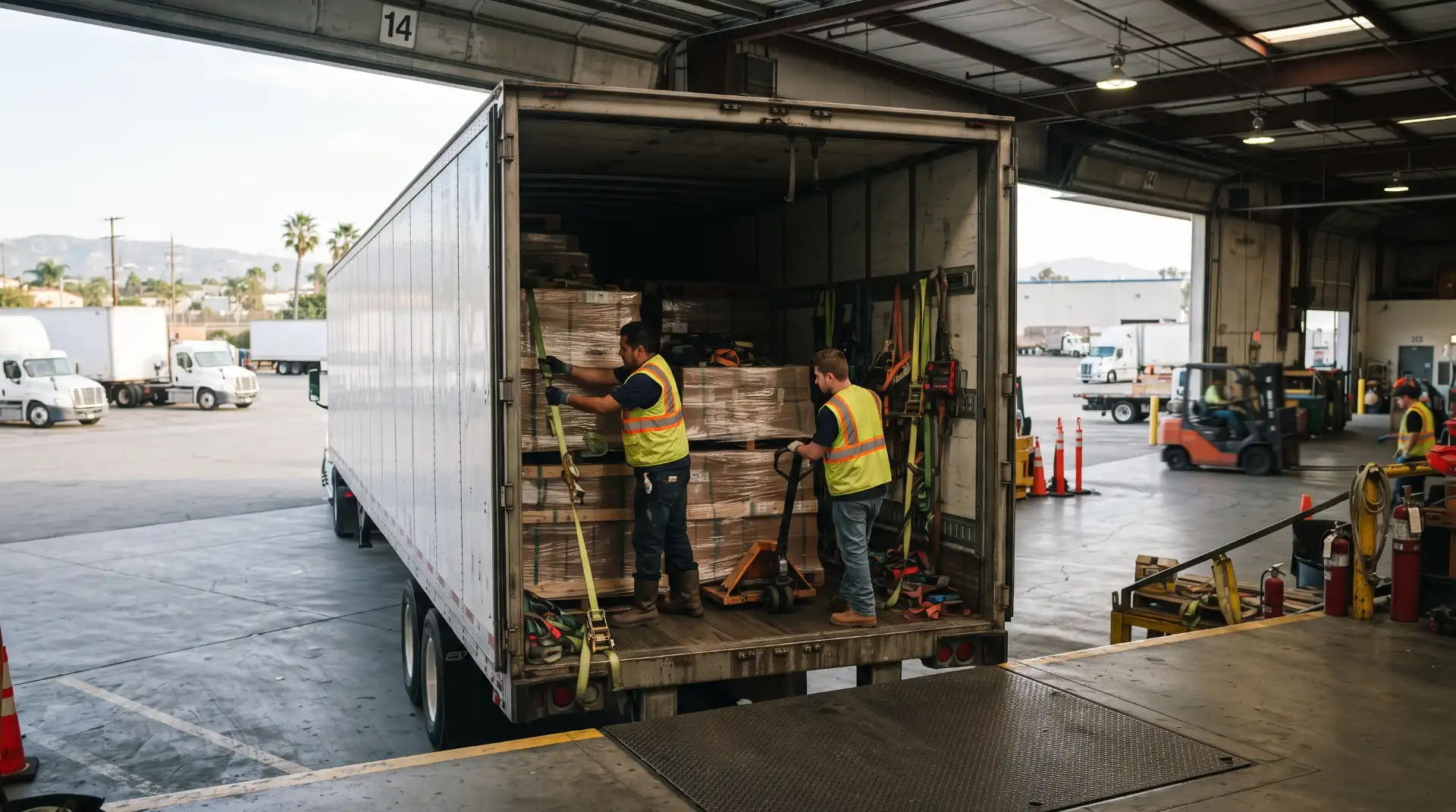
The motor carrier operates the commercial vehicle and generally has significant responsibilities for safe operation. The shipper may prepare or provide the cargo. A warehouse may physically load it. A third-party contractor may perform specialized loading work.
Federal FMCSA guidance recognizes the motor carrier and driver as having responsibility for ensuring cargo is properly loaded and secured in the ordinary non-hazardous-material context.
That does not necessarily answer whether a shipper or loading company can face a separate civil claim when its own conduct contributes to an injury.
A complete investigation therefore needs to distinguish regulatory responsibility from potential civil liability.
The Importance of Looking Beyond the Truck Driver
Truck accident investigations sometimes focus too narrowly on the person behind the wheel.
Driver conduct can certainly be important, but a commercial truck is part of a much larger transportation system.
The vehicle may have been loaded by warehouse workers, dispatched by a carrier, maintained by a contractor, and supplied with cargo by another business.
If a crash was caused by a defective or improperly secured load, looking only at the driver’s actions may leave important questions unanswered.
For injured motorists, understanding the complete chain of events can help identify what evidence should be preserved and which organizations need to be investigated.
Final Thoughts on Cargo Loading Companies and Truck Accident Liability
Cargo loading can play an important role in commercial truck safety. Freight must be properly positioned, distributed, packaged, and secured before a truck enters public roads.
When a truck accident occurs, the motor carrier and driver may have significant responsibilities under federal safety regulations. FMCSA guidance specifically places responsibility on the motor carrier and driver for ensuring cargo is properly loaded and secured in the ordinary circumstances addressed by its guidance.
However, that does not necessarily end the investigation when another company physically loaded the cargo.
A shipper, warehouse operator, loading contractor, manufacturer, or other business may become relevant if its own actions or omissions contributed to an unsafe condition that caused a collision. Determining whether that occurred requires evidence concerning the loading process, cargo configuration, securement equipment, shipping documents, contracts, inspections, vehicle data, photographs, and the circumstances of the crash.
For Orange County truck accident victims, these cases can be particularly complex because commercial freight may pass through multiple companies and facilities before reaching its destination.
A careful investigation should therefore look beyond the moment of impact and examine what happened before the truck entered the roadway.
If a truck accident involved shifted cargo, an overloaded trailer, falling freight, damaged securement equipment, or another suspected loading problem, the evidence surrounding the shipment may become an important part of determining what caused the collision and which parties may bear responsibility.
Disclaimer: This article provides general educational information about cargo loading, truck accidents, and potential liability in the United States and California. It is not legal advice and does not create an attorney-client relationship. The legal outcome of any individual truck accident depends on its specific facts, applicable law, evidence, and procedural requirements.