
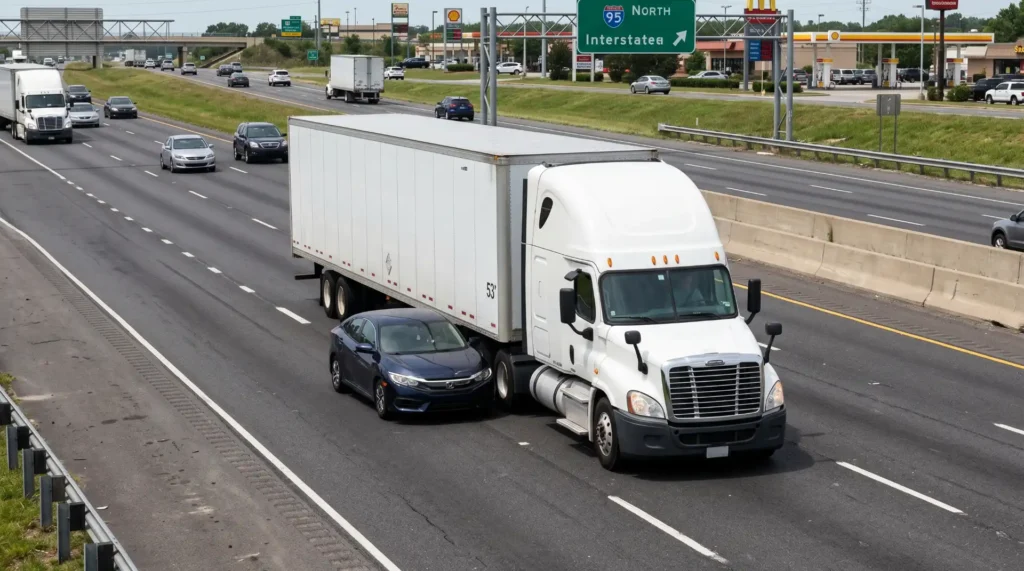
Semi truck blind spot accidents are among the most common and dangerous types of commercial vehicle crashes in the United States. Because tractor trailers are significantly larger than passenger vehicles, truck drivers have areas around their vehicles where visibility is limited or completely blocked. These areas, commonly referred to as “no-zones,” can create serious hazards when other motorists travel within them.
When a truck driver cannot see a nearby vehicle, even a routine lane change or turn can lead to a devastating collision. Understanding how blind spot accidents occur, who may be responsible, and what evidence may support a claim can help accident victims better understand their options following a crash.
What Are Semi Truck Blind Spots?
A blind spot is an area around a vehicle that cannot be directly observed by the driver through mirrors or normal lines of sight. While all vehicles have blind spots, those surrounding large commercial trucks are substantially larger.
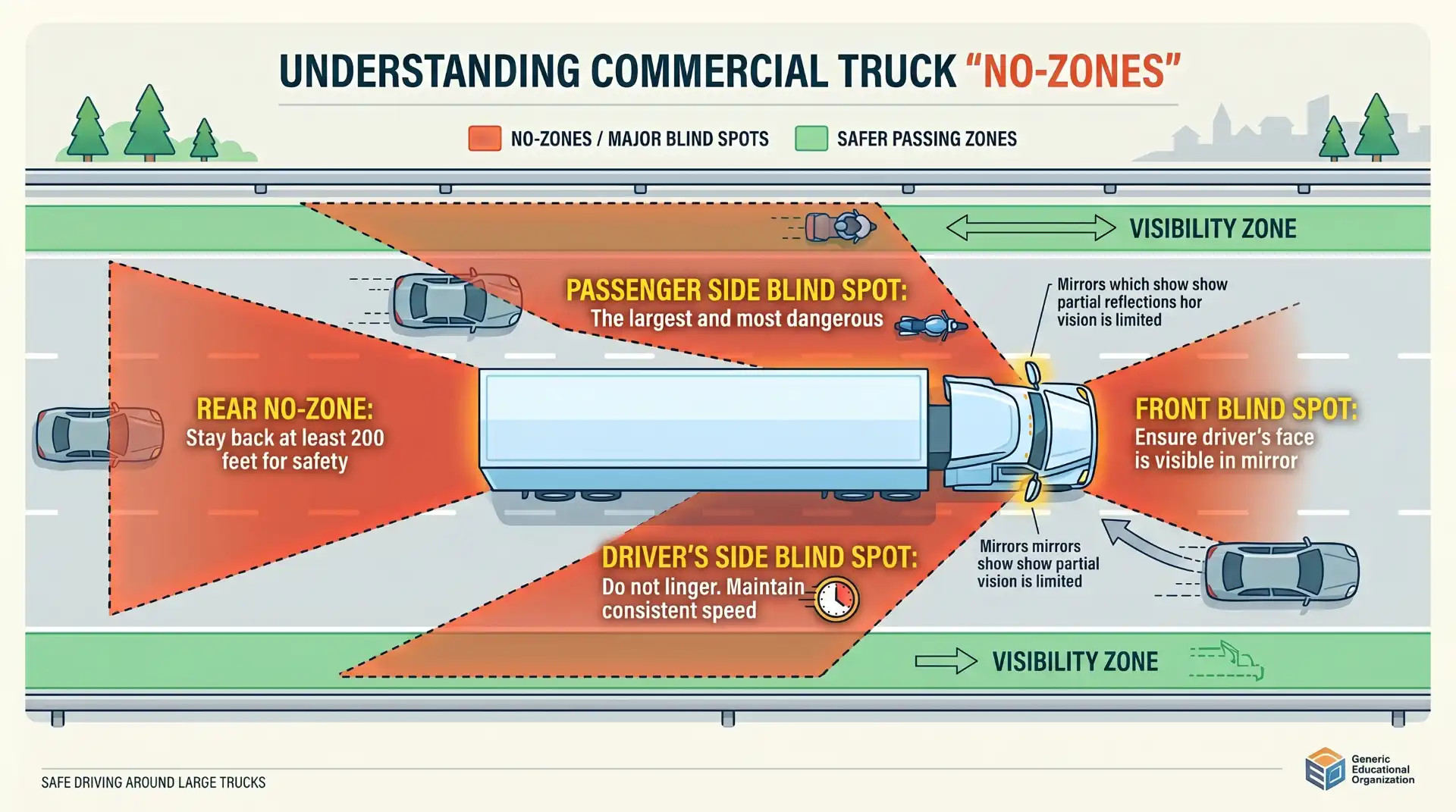
A typical tractor trailer has four primary blind spot zones. These include the area directly in front of the truck, directly behind the trailer, and along both sides of the vehicle. The blind spot on the right side is generally the largest and may extend across multiple lanes of traffic.
Many passenger vehicle drivers mistakenly assume truck drivers can see them whenever they are nearby. In reality, a vehicle traveling beside a trailer may completely disappear from the truck driver’s view.
Why Blind Spot Accidents Happen
Blind spot crashes often occur during routine driving maneuvers. A truck driver may attempt to merge, change lanes, make a wide turn, or move through congested traffic without noticing a nearby vehicle.
Several factors can contribute to these collisions.
Truck drivers may be dealing with limited visibility due to weather conditions. Heavy rain, fog, or nighttime driving can further reduce awareness of surrounding traffic.
Driver fatigue is another common factor. Long hours behind the wheel can affect reaction time and decision making, increasing the likelihood of overlooking nearby vehicles.
Distracted driving also remains a concern. Looking at a dispatch device, GPS system, phone, or dashboard controls for even a few seconds may cause a driver to miss important traffic conditions.
In some cases, improperly adjusted mirrors or defective mirror systems may contribute to a crash.
Understanding Truck No Zones
The Federal Motor Carrier Safety Administration (FMCSA) refers to truck blind spots as “No Zones.”
The front no-zone can extend approximately 20 feet ahead of the truck. If a passenger vehicle cuts closely in front of a truck, the driver may lose sight of that vehicle entirely.
The rear no-zone extends behind the trailer. Because rear visibility is extremely limited, drivers may not see vehicles following too closely.
The left side blind spot typically covers one lane adjacent to the truck.
The right side blind spot is often much larger, extending across multiple lanes and making right-side lane changes particularly hazardous.
The FMCSA provides educational resources regarding truck blind spots and safe driving around commercial vehicles. More information can be found at:
 Common Types of Blind Spot Truck Accidents
Blind spot collisions can occur in several ways.
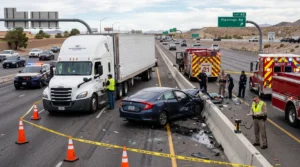
Lane change accidents are among the most common. A truck driver may begin moving into an adjacent lane without realizing another vehicle occupies that space.
Wide-turn accidents often occur when a truck swings left before making a right turn. Drivers nearby may mistakenly believe the truck is turning left and attempt to pass on the right.
Merging accidents can happen when trucks enter highways from entrance ramps or move between lanes in heavy traffic.
Sideswipe collisions frequently result from trucks drifting into neighboring lanes due to blind spot limitations.
Each of these scenarios may lead to serious injuries because of the size and weight difference between commercial trucks and passenger vehicles.
Injuries Often Associated With Blind Spot Accidents
Truck accidents frequently produce severe injuries due to the tremendous force involved in these collisions.
Victims may experience traumatic brain injuries, spinal cord injuries, broken bones, internal injuries, and severe soft tissue damage.
Some crashes result in long-term disabilities that affect a person’s ability to work, drive, or perform daily activities.
In the most severe cases, blind spot truck accidents may result in fatal injuries, leaving surviving family members facing emotional and financial challenges.
Who May Be Liable for a Blind Spot Truck Accident?
Liability depends on the circumstances of the crash.
The truck driver may be responsible if they failed to check mirrors, violated traffic laws, drove while distracted, or operated the vehicle negligently.
The trucking company may also share responsibility. Companies have obligations regarding driver training, hiring practices, supervision, and vehicle maintenance.
If a defective mirror system, camera system, or vehicle component contributed to the collision, a manufacturer may potentially bear some responsibility.
Maintenance providers may also become involved if improperly serviced equipment affected visibility or vehicle operation.
Because commercial trucking cases often involve multiple parties, investigations typically require a detailed review of evidence.
 Evidence That May Help Establish Fault
Successful truck accident claims often rely on extensive evidence.
Investigators may review police reports, witness statements, photographs, surveillance footage, and vehicle damage.
Commercial trucks frequently contain electronic control modules and event data recorders, sometimes referred to as black boxes. These devices may provide information regarding vehicle speed, braking activity, and operational data before a crash.
Driver logs, maintenance records, inspection reports, and dispatch communications may also provide important insights.
In some situations, accident reconstruction specialists may analyze the crash to determine how the collision occurred.
Comparative Negligence in Truck Blind Spot Cases
In many truck accident claims, both drivers may share some degree of responsibility.
For example, a passenger vehicle driver may have remained in a truck’s blind spot for an extended period while the truck driver attempted a lane change.
California follows a comparative negligence system. This means fault can be divided among multiple parties based on their respective contributions to the accident.
The specific allocation of responsibility depends on the available evidence and circumstances surrounding the collision.
How Drivers Can Reduce Blind Spot Accident Risks
Although truck drivers carry significant responsibilities, passenger vehicle drivers can also take steps to reduce risk.
Maintaining a safe distance from commercial trucks can improve visibility for both drivers.
Passing trucks promptly rather than lingering beside trailers may help reduce time spent in blind spot areas.
Motorists should avoid cutting directly in front of large trucks because truck drivers may not be able to see smaller vehicles immediately after a lane change.
Using turn signals consistently and remaining alert around commercial vehicles may also improve roadway safety.
What To Do After a Semi Truck Blind Spot Accident
The moments following a truck accident can be overwhelming.
Seeking medical attention should generally be a priority, even when injuries initially appear minor. Some injuries may not become apparent until hours or days after a collision.
Photographs of the accident scene, vehicle damage, road conditions, and visible injuries may help document important details.
Obtaining contact information from witnesses can also prove valuable later.
Victims may benefit from preserving medical records, repair estimates, and communications related to the crash.
Because trucking cases often involve extensive evidence, early investigation may help preserve important information before it becomes unavailable.
Final Thoughts
Semi truck blind spot accidents remain a significant concern on American highways. The large blind spots surrounding commercial trucks create unique hazards that can lead to severe collisions during lane changes, turns, and merging maneuvers.
Understanding how these accidents occur, what factors contribute to them, and how liability may be determined can help drivers stay informed. While truck drivers and trucking companies have responsibilities to operate safely, awareness among all motorists plays a role in reducing the risk of serious blind spot crashes.
By recognizing truck no-zones and practicing safe driving habits around commercial vehicles, motorists can help reduce the likelihood of dangerous roadway encounters.